|
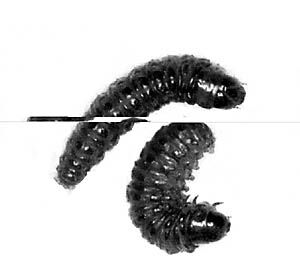
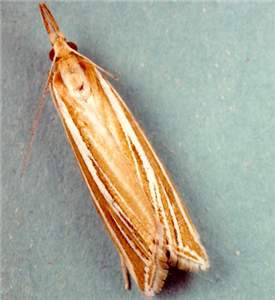
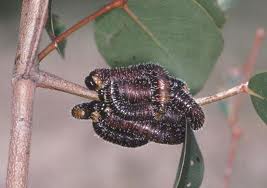
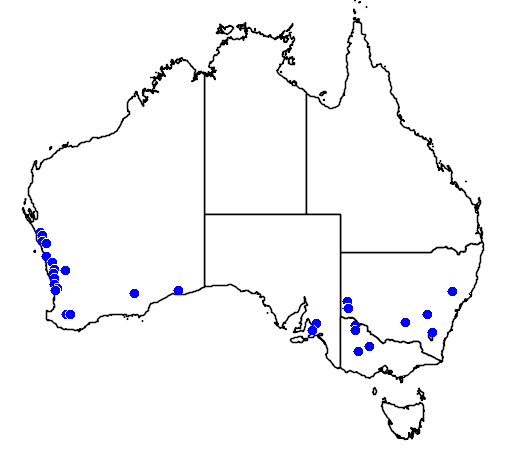 Occurences in Australia | INTRODUCTION This page has been created to extend the knowledge of all users about the Pasture Webworm (PWW). PWW is a well known pest found in animal pastures, wheat and barley crops. They are the most damaging as a caterpillar which can cause significant losses within cereal production. They usually only come out when conditions are cool and damp, usually at night. They live in web lined tunnels. PWW are a relatively insignificant pest of pastures, but can cause greater losses to establishing cereals IDENTIFICATION Eggs are a pinhead sized, white when first laid, and gradually become a reddish looking outside which is made up with a rib like outside, also entwined with other ribs, creating a mesh like shell when viewed through a microscope. Larvae have a smooth like body, which is a greenish brown colour, leading up to a shiny black head. They are approximately 1mm long when first hatched, to a maximum of 18mm as large larvae. Pupae are about 12mm long and about 3mm wide, they are a creamy yellow colour at first and then turn into a honey, brownish colour, then hey prepare for moth emergence, turning into a dark colour Once they have reached adult-hood, they are approximately 12mm long and may have a wingspan of 22mm. They have grey-brownish wings, with dark patches o their forewings. The moth has a beak like mouth, with enlarged mouth parts. When the moth is sleeping, their wings fold back in a vertical position, which allows the moth to bled with its surroundings.
|
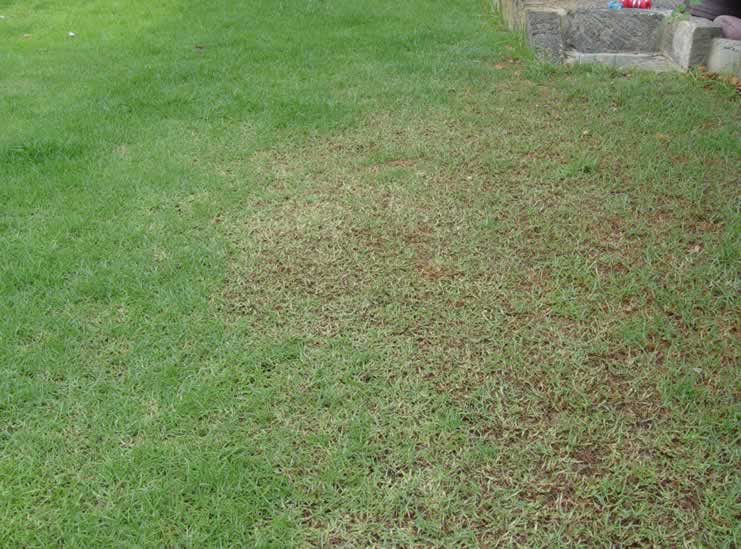
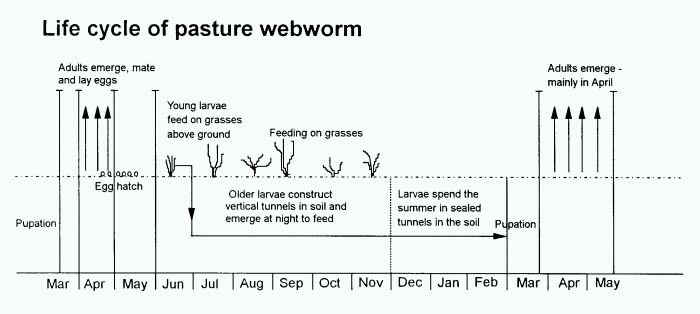
DAMAGE/ IMPACT ON CROP Pasture Webworm causes most of its damage in cereals. The damage can be identified as Small denuded areas that appear in the crop, this happens usually within three weeks of the plants emergence. These areas of damage gradually increase in size and may give the impression that the crop has not emerged yet. The newly hatched larvae climb up the seedlings and eat the upper surface of the blades, which causes 'windows' in the leaf. Feeding generally occurs in the centre of the leaf, but can also occur on the edges. The damage from pasture webworm on cereals during this stage is similar to damage caused by the Lucerne flea. The damage in pastures can be less evident than in cereals because the signs of damage may be hidden by common weeds like, cape weed, clovers and ryegrasses. LIFE CYCLE The pasture webworm only has one generation per year (including a resting stage where the larvae rest in tunnels over summer, (December to February)). The adults emerge during autumn and mating begins instantly and egg laying can occur within hours after emergence. The female lays her eggs on the ground of pastures, or on emerging cereals that have been sown early. Egg laying is done within four days but the period of egg laying lasts about six weeks. The time it takes for the eggs to hatch depends on temperature, usually within 1 to 4 weeks the eggs are all hatched. The hatched larvae begin feeding as soon as they emerge. The young larvae feed on the grasses above the ground and form silken tubes along the leaf. Older larvae make themselves a web-lined tunnel in the soil, from which they emerge at night to feed. The older larvae often cut the grass at ground level and carry it back to their tunnels to feed on safely. During spring the fully grown larvae stops feeding, deepen their tunnels and cover the entrance of the tunnel with a heavy web silk. The larvae then turn a creamy yellow colour and enter the summer rest stage. Population occurs in early autumn, lasting about three weeks. | IPM CONTROL
Cultural When you are preparing paddocks, aim to have the least amount of grassy residue present. This reduces the chance that a female moth will be attracted to the pasture as an egg laying site. It also reduces the amount of food present for the webworm, potentially starving already existing webworm on the paddock.
Suggested practices
Chemical Spot spraying a paddock can be done if infestations are in localized pockets. Chlorpyrifos (350 g active ingredient per hectare or 700 ml of 500 g/L product), is the only registered chemical for control of pasture webworm in pastures and forage crops.
Biological There are no known parasites, predators or pathogens that effectively control the Pasture Webworm.
Econoimic Threshold Inspect seedlings within 1 square metre of the crop, and the top 20mm of the soil to check for small webworm and larger ones. The recomended treatment threshold is at 10 damaged plants per square metre.
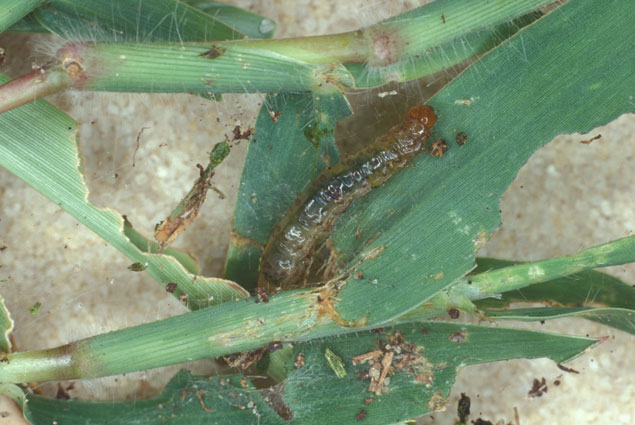 Damage caused by Pasture webworm |